- by Niyi Busari ,
- Aug 09, 2026
.jpg.jpeg)
AFCON 2025 Final Thrown Into Uncertainty Amid Fresh Conflicting Reports and Legal Battle
-

- by Niyi Busari,
- Apr 06, 2026
- in Football Politics
null
AFCON 2025 Final Thrown Into Uncertainty Amid Fresh Conflicting Reports and Legal Battle
By Niyi Busari
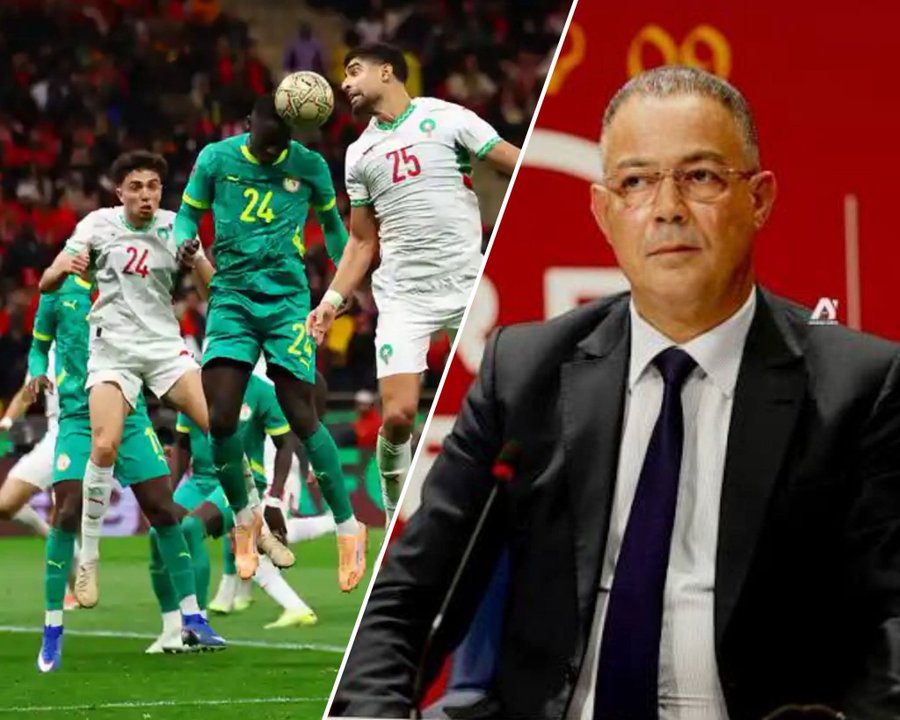
The outcome of the 2025 Africa Cup of Nations final remains unresolved, as fresh revelations have intensified an already contentious dispute between Senegal, Morocco, and the Confederation of African Football (CAF), BSNSports.com.ng reports.
According to an investigation by Le Monde, five official match reports contradict key decisions taken by Confederation of African Football, raising serious questions about the handling of the January 18 final at Prince Moulay Abdellah Stadium in Rabat. Nearly three months after the match, the case is now under review by the Court of Arbitration for Sport.
A Final Marred by Confusion
The highly anticipated clash between Senegal and host nation Morocco was disrupted by adverse weather and mounting tensions. Senegal initially secured a 1–0 lead in regulation time, appearing on course to claim the title.
However, the closing stages descended into chaos following a controversial penalty awarded to Morocco. Senegalese players and officials staged a protest, briefly leaving the pitch in an incident that halted play for approximately 14 minutes.
After the match resumed, Morocco failed to convert the penalty, and Senegal went on to seal victory in extra time through a goal from Pape Gueye. What seemed a decisive win for Senegal quickly evolved into a legal dispute.
Morocco’s Appeal and CAF’s Decision
In the aftermath, the Royal Moroccan Football Federation lodged formal complaints, arguing that Senegal’s temporary walk-off constituted abandonment under CAF regulations — an offence warranting forfeiture.
On March 17, CAF’s Appeals Committee upheld Morocco’s claim. In a highly controversial ruling, Senegal was deemed to have forfeited the match, and Morocco was awarded a 3–0 victory, overturning the result achieved on the field.
Senegal’s football authorities rejected the decision and escalated the matter to CAS, citing concerns over due process and the integrity of competition rules.
Contradictions in Official Reports
The findings reported by Le Monde have further complicated the case. Drawing on accounts from match officials — including the referee, match commissioner, and security personnel — the reports describe a breakdown in match control and inconsistencies in decision-making.
One key point centers on the 97th minute, when officials reportedly concluded that Senegal’s withdrawal to the dressing room constituted abandonment. Under standard regulations, this should have triggered immediate forfeiture.
Despite this, the match was allowed to continue.
The investigation also alleges that instructions were issued behind the scenes to avoid dismissing Senegalese players who had already received cautions, with the apparent aim of preventing a high-profile disruption during the live broadcast.
Governance Under Scrutiny
The episode has exposed significant inconsistencies in CAF’s handling of the final. While the governing body later ruled in Morocco’s favour based on abandonment, its decision to allow the match to proceed — and initially validate Senegal’s victory — has raised questions about procedural coherence.
Observers say the situation reflects broader governance concerns, with regulations seemingly applied inconsistently under pressure.
Awaiting CAS Ruling
The final determination now rests with CAS, whose verdict could set an important precedent for football governance in Africa.
Morocco is expected to rely on the official reports suggesting abandonment, while Senegal will argue that the continuation of the match invalidates any such claim, rendering CAF’s subsequent reversal legally flawed.
A Test of Credibility
Beyond the question of who ultimately lifts the trophy, the controversy has sparked a wider debate about credibility and accountability in African football administration.
Traditionally a celebration of the continent’s top talent, the AFCON final has instead become a focal point for concerns over governance and decision-making. As the football world awaits CAS’s ruling, the case underscores the long-term consequences of inconsistent officiating and administrative intervention at the highest level.

you may also read
- by Niyi Busari ,
- Aug 05, 2026
2026 NFF Election: North Central FA Chairmen Back Gusau With ...
- by Lastborn ,
- Aug 04, 2026
CAF Executive To Meet Thursday On African Club Competitions Reforms
- by Niyi Busari ,
- Jul 31, 2026
NFF Congress Gets New Date After CAF Confirms Super Eagles ...

- by Admin ,
- Jul 28, 2026
0 Comments:
Leave a Reply