- by Lastborn ,
- Aug 16, 2026
.jpg.jpeg)
Continuity or Change? The Case For And Against Gusau Ahead Of NFF Poll
-

- by Admin,
- Aug 16, 2026
- in Football Politics
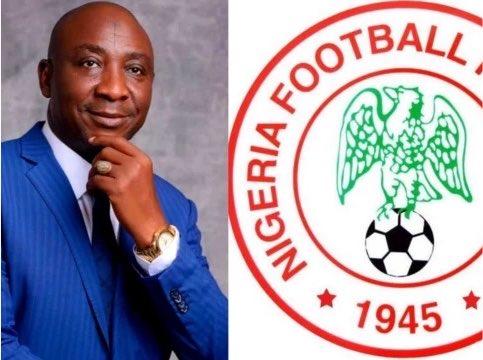
Ibrahim Gusau, NFF President
Continuity or Change? The Case For And Against Gusau Ahead Of NFF Poll
By Our Reporter
The Nigeria Football Federation (NFF) is facing one of the most difficult periods in recent memory, with growing criticism over the state of the country's football and renewed scrutiny of President Ibrahim Musa Gusau's leadership ahead of the federation's September election, BSNSports.com.ng reports.
Gusau's decision to seek a second term has further intensified the debate. Critics argue that Nigeria's recent struggles on the international stage should be enough to prompt a change in leadership, while his supporters insist that football administration cannot be judged solely by results on the pitch.
The Super Eagles' failure to qualify for the 2026 FIFA World Cup remains the most significant source of public frustration. Nigeria missed out on the tournament despite being given an additional route through the African play-off process, extending the disappointment surrounding the country's senior men's national team.
The struggles have not been confined to the Super Eagles. Nigeria's male U-17 and U-20 teams have also endured difficult periods, raising concerns about the country's once-renowned youth development system and its ability to consistently produce teams capable of competing at continental and global level.
The Super Falcons, meanwhile, entered the 2026 Women's Africa Cup of Nations in Morocco as defending champions but endured a disappointing campaign, with questions raised about their tactical approach and overall performances.
Against this backdrop, Gusau has remained determined to pursue another term in office despite calls from sections of the football community for his resignation.
His supporters argue that judging the NFF administration exclusively by competitive results overlooks developments taking place away from the pitch. They point to initiatives in coaching and refereeing development, women's football, player welfare, grassroots infrastructure and domestic competitions as evidence that the federation has pursued broader reforms.
Among the achievements cited by Gusau's supporters are increased access for Nigerian coaches to CAF coaching courses, efforts to strengthen the women's football structure with FIFA support, improved accommodation arrangements for national-team players and officials, and the development of FIFA-standard Goal Project facilities for grassroots and elite football.
They also highlight Nigeria's hosting of regional and international football events, including WAFU B competitions, women's football programmes, the CAF Congress and CAF Awards, while pointing to what they describe as improved dialogue and stability among stakeholders within the football family.
Supporters further argue that the development of women's football during Gusau's tenure deserves recognition, alongside improvements in domestic football administration and efforts to create greater opportunities for players and officials.
However, those arguments have struggled to overcome the frustration generated by Nigeria's performances in major competitions.
For many Nigerians, the ultimate measure of football administration remains the performance of the national teams and the ability to qualify for major tournaments and compete successfully once there.
The failure to reach the 2026 World Cup, coupled with the struggles of the country's youth teams and the Super Falcons' underwhelming WAFCON campaign, has therefore become central to the opposition against Gusau's re-election bid.
There is also the question of accountability.
The NFF recently announced the establishment of a five-member fact-finding committee tasked with examining the reasons behind the apparent decline of Nigerian football. While the move has been presented as an attempt to understand and address the problems confronting the sport, its timing has generated considerable debate.
With the NFF election scheduled for September, critics have questioned why such an exercise is being undertaken so close to the poll and whether a committee constituted by the federation itself can independently investigate issues involving the administration.
The composition of the committee has also attracted scrutiny. Although its members are regarded as experienced figures within Nigerian football, questions remain over whether an independently constituted body would have provided greater credibility and public confidence.
There is certainly no shortage of issues for such a committee to investigate. Concerns surrounding youth development, grassroots football, coaching structures, domestic competitions, player welfare, national-team preparation, technical appointments, football infrastructure and the overall administration of the game have been debated for years.
The central question, therefore, is not simply whether Gusau deserves another term, but whether the NFF's existing leadership structure has the capacity to reverse the country's declining fortunes.
Gusau and his supporters are likely to make continuity a central theme of their campaign. They will argue that reforms in football administration require time to produce sustainable results and that abandoning ongoing programmes after one term could further disrupt the development process.
His opponents, however, will point to the results of the national teams and insist that Nigerian football cannot afford another four years without substantial improvement at the highest competitive level.
The September election could consequently become a referendum not only on Gusau's leadership but also on the direction of Nigerian football.
Whatever the outcome, the next NFF administration will face enormous expectations. Nigeria needs more than qualification for major tournaments; it needs a sustainable football development system capable of producing competitive national teams, strengthening domestic football, improving infrastructure and restoring public confidence.
For Gusau, the challenge is particularly clear: convincing the electorate that continuity represents the best route to recovery, while persuading a sceptical football public that his administration has the vision, structures and capacity to deliver the results Nigerians expect.

you may also read
- by Niyi Busari ,
- Aug 09, 2026
3SC, Aweroro Part Ways After Historic Continental Qualification
- by Niyi Busari ,
- Aug 05, 2026
2026 NFF Election: North Central FA Chairmen Back Gusau With ...
- by Lastborn ,
- Aug 04, 2026
0 Comments:
Leave a Reply