- by Admin ,
- Aug 23, 2026
.jpg.jpeg)
NFF Leadership Changes: The Legal Procedures Governing Resignation And Removal Of Board Members, General Secretary
-
- by Niyi Busari,
- Aug 25, 2026
- in Football Politics
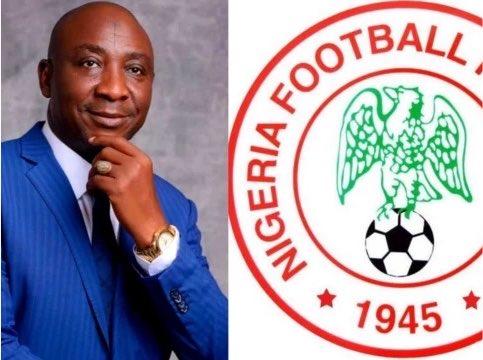
The Nigeria Football Federation logo
NFF Leadership Changes: The Legal Procedures Governing Resignation And Removal Of Board Members, General Secretary
By Niyi Busari
With the Nigeria Football Federation (NFF) preparing for its 2026 elective congress, questions surrounding the tenure, resignation and possible removal of members of the federation's leadership have assumed renewed importance, BSNSports.com.ng reports.
The NFF Congress, at its Extraordinary General Assembly in March 2026, approved amendments to the Federation's Statutes, Electoral Code and Standing Orders. The Federation subsequently announced that its 2026 Elective Congress will hold in Lafia, Nasarawa State, on September 27.
Against that background, any dispute over the resignation of an Executive Committee member, the status of the General Secretary or the possible dissolution or reconstitution of the NFF leadership must be considered within the framework of the applicable NFF Statutes.
How the General Secretary emerges
The office of the NFF General Secretary is different from that of an elected member of the Executive Committee.
Under the provision cited in the debate, Article 45(2) provides that the General Secretary is appointed by the Executive Committee on the proposal of the NFF President. The appointment is governed by an agreement under private law and requires the occupant to possess the necessary professional qualifications and experience.
The General Secretary is principally the head of the NFF Secretariat and is not elected into office in the same manner as members of the Executive Committee. Consequently, questions concerning the appointment, tenure, resignation or removal of the General Secretary must be distinguished from questions concerning elected Executive Committee members.
As for the resignation, the NFF General Secretary willing to resign must write a letter of resignation to the President and ratified by the Congress. For instance, former General Secretary, Musa Amadu resigned as the Secretary General of the Nigeria Football Federation (NFF) on March 18, 2015 after submission of his resignation letter on March 18, 2015, to the president and took immediate effect.
What happens when an Executive Committee member wants to resign?
The procedure for resignation of an NFF member is also governed by the Statutes.
The provision cited in the Article 19(1), states that a member may resign by giving notice of resignation to the General Secretary not later than two months before the end of the football season.
The provision is significant because it indicates that resignation is not simply a matter of making a public announcement or communicating an intention to leave office. The Statutes prescribe a formal process and a specific timeframe.
There is also a financial condition.
Under Article 19(2), as cited, a resignation does not become valid until the member has fulfilled his or her financial obligations to the NFF and its members, unless the Federation decides to waive all or part of those obligations.
In practical terms, therefore, the validity of a resignation may depend on whether the prescribed notice was properly submitted and whether any outstanding financial obligations have been addressed.
Resignation is different from removal
Another important distinction is between resignation and dismissal or removal from office.
A resignation is initiated by the office-holder. Removal, on the other hand, is an action taken through the authority provided by the governing rules.
This distinction becomes particularly important in relation to the office of the General Secretary.
The provision cited in the discussion, Article 42(2), states that only the NFF President may propose to the Executive Committee the dismissal of the General Secretary.
If that provision remains unchanged in the applicable 2026 Statutes, it would mean that the process for removing the General Secretary must begin in the manner prescribed by the Statutes rather than through an alternative procedure outside the Federation's constitutional framework.
It would also mean that the authority of the NFF Congress should not automatically be equated with the power to initiate the dismissal of the General Secretary.
Can the entire NFF Board simply be dissolved?
The question of "dissolving the NFF Board" requires even greater caution.
The NFF Executive Committee is constituted through the Federation's electoral and statutory framework. It cannot simply be treated as an ordinary board whose members can be removed collectively without regard to the Statutes.
The distinction between individual resignation, individual removal, expiration of tenure and dissolution of an organ is legally significant.
For example, the NFF has already stated that the tenure of the present Executive Committee, headed by President Ibrahim Musa Gusau, runs to September 2026. The Federation's 2026 elective congress has been fixed for September 27, with the current administration's tenure scheduled to end on September 29.
That means the natural expiration of an elected administration should not be confused with the premature dissolution or removal of the Executive Committee.
The role of Congress
The NFF General Assembly, or Congress, remains a central organ in the Federation's governance structure.
The NFF's own description of the business of its General Assembly shows that Congress considers matters including statutory amendments, financial statements, budgets, appointments and other matters submitted by members or the Executive Committee.
The 2026 Extraordinary General Assembly further demonstrated this authority when Congress approved amendments to the NFF Statutes, Electoral Code and Standing Orders.
However, the fact that Congress is the supreme deliberative body of the Federation does not necessarily mean that it can bypass specific procedures established by the Statutes for particular offices.
In other words, the powers of Congress must be exercised within the constitutional framework of the NFF itself.
FIFA rules and Nigerian law
The NFF does not operate in isolation. As a FIFA member association, it is also subject to FIFA's governance principles, including the requirement that member associations manage their affairs independently and without undue interference.
At the same time, Nigerian courts have previously considered the legal status of the NFF and its officials. In a 2016 Federal High Court proceeding, the court held, in the context of that case, that the NFF's status did not place it outside Nigerian law.
This means that disputes concerning NFF governance can potentially involve three overlapping layers: the NFF Statutes, applicable FIFA rules and Nigerian law.
The existence of a statutory provision within the NFF does not, by itself, answer every possible legal question. The circumstances of the dispute and the applicable law must also be considered.
What this means ahead of the 2026 election
With the NFF election scheduled for September 27, questions surrounding the status of members of the Executive Committee and the General Secretary are likely to attract considerable attention.
The central issue, however, should not be who has made a public declaration of resignation or who is demanding that an official be removed.
The critical questions are:
- Was the resignation submitted through the procedure prescribed by the applicable Statutes?
- Was it submitted within the stipulated period?
- Have any statutory financial obligations been fulfilled or waived?
- If removal is being proposed, does the person or organ initiating the process have the authority to do so?
- Which edition of the NFF Statutes governs the dispute?
- Has the procedure complied with applicable NFF, FIFA and Nigerian legal requirements?
Until those questions are answered, claims that an NFF official has automatically resigned, has been validly removed or that the entire Executive Committee can simply be dissolved should be treated with caution.
The bottom line
The NFF's governance structure contains defined procedures for the appointment, resignation and removal of its officials. Those procedures are not interchangeable.
An elected Executive Committee member, the NFF President and the General Secretary occupy different positions within the Federation's constitutional structure, and the procedure applicable to one office cannot automatically be applied to another.
As Nigerian football approaches the September 2026 elective congress, adherence to the applicable Statutes will therefore be crucial. The legitimacy of any leadership transition will ultimately depend not merely on announcements or political claims, but on whether the prescribed constitutional and legal procedures have been followed.

you may also read

- by Admin ,
- Aug 18, 2026
Gusau’s NFF Leadership Earns Blueprint Excellent Performance Award
- by Lastborn ,
- Aug 17, 2026
NFF Orders Super Falcons Technical Crew To Resign With Immediate ...

- by Lastborn ,
- Aug 16, 2026
Gusau Is Not Blameless, But He Is Not Nigeria's Entire ...
- by Admin ,
- Aug 16, 2026
0 Comments:
Leave a Reply