- by Lastborn ,
- Aug 18, 2026
.jpg.jpeg)
Six Key Takeaways From 2026 WAFCON
-
- by Niyi Busari,
- Aug 18, 2026
- in CAF Competition
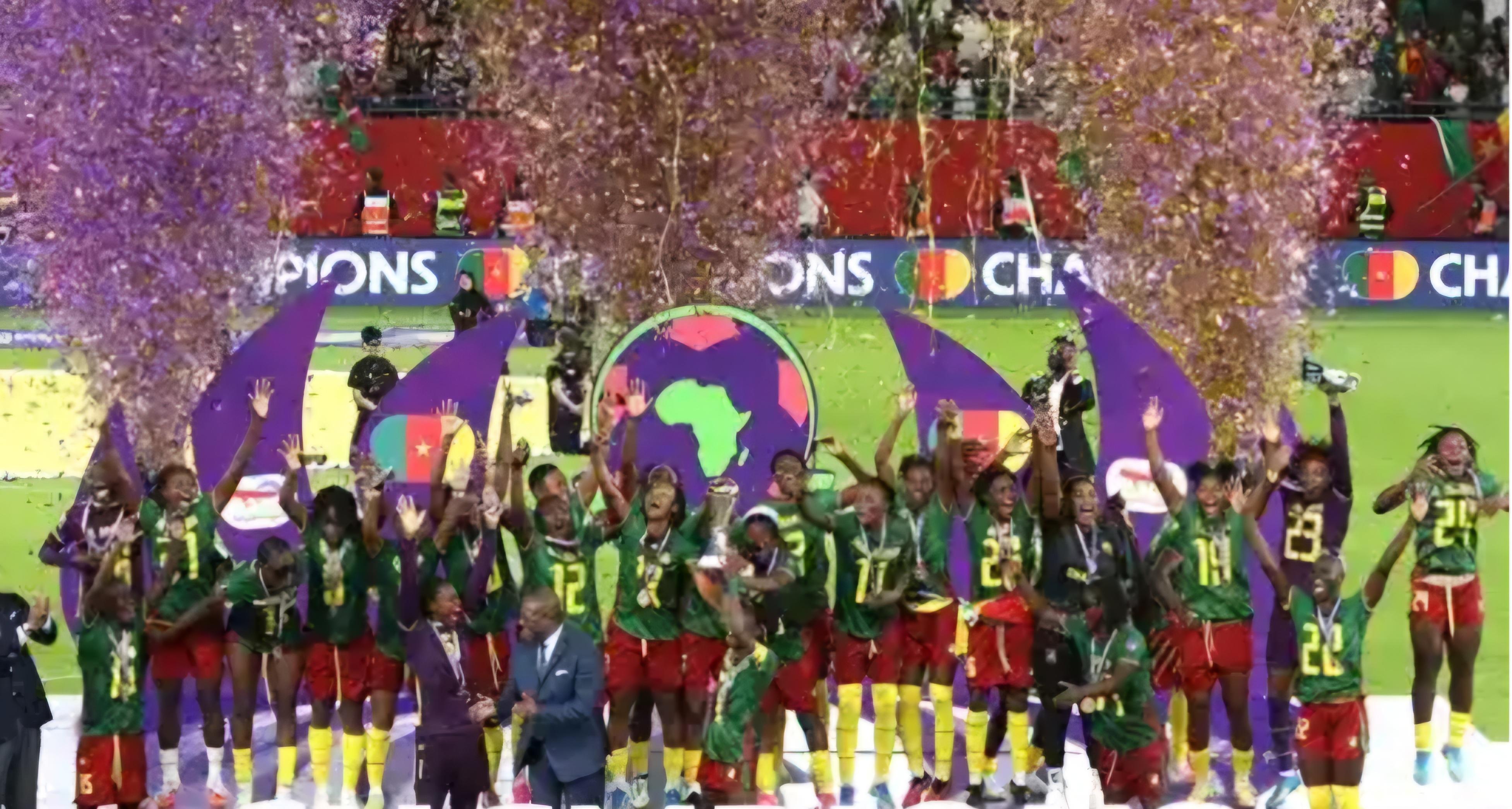
Cameroon women's national team jubilating with WAFCON trophy after winning the title for the first time
Six Key Takeaways From 2026 WAFCON
By BSN Sports
Cameroon’s historic 3-0 victory over Malawi in Sunday’s Women’s Africa Cup of Nations (WAFCON) final capped an enthralling three weeks in Morocco and underlined the growing competitiveness of women’s football across the continent, BSNSports.com.ng reports.
The triumph made Cameroon only the fourth nation to win the continental women’s title, joining Nigeria, Equatorial Guinea and South Africa in the exclusive group of WAFCON champions.
The 2026 tournament, which was postponed shortly before its originally scheduled March start, ultimately delivered a competition filled with upsets, breakthrough performance and significant talking points about the future of the women’s game in Africa.
Here are the six takeaways
1) Expansion brings greater competitiveness
The decision by the Confederation of African Football (CAF) to expand the tournament from 12 to 16 teams proved largely successful, despite the timing of the announcement.
Cameroon were among the biggest beneficiaries. The Indomitable Lionesses had been eliminated by Algeria during qualifying but secured a place at the finals through their FIFA ranking following the expansion.
They went on to make the most of the opportunity, defeating Nigeria in the quarter-finals and Morocco in the semi-finals before overcoming Malawi in the final to claim their maiden continental crown.
Côte d’Ivoire, another team that missed the previous WAFCON, also benefited from the ranking-based qualification route. The Ivorians topped their group before their campaign ended in the quarter-finals against Algeria.
The expanded format also provided more opportunities for emerging teams to compete against Africa’s established powers.
All four semi-finalists — Cameroon, Malawi, Morocco and Algeria — secured qualification for the 2027 FIFA Women’s World Cup, with Malawi and Algeria set to make their debut at the global tournament alongside Cameroon and hosts Morocco.
The increased number of high-level fixtures appears to have narrowed the gap between traditional powerhouses and emerging nations.
Tanzania, for example, stunned South Africa despite a 65-place difference in the FIFA rankings, while the reigning African champions were forced to rely on a 99th-minute equaliser to draw with Côte d’Ivoire.
Malawi provided the tournament’s biggest fairytale. The debutants shocked 10-time champions Nigeria 3-2 in their opening match before defeating Ghana and Algeria to reach the final.
The Chawinga sisters, Temwa and Tabitha, were central to Malawi’s remarkable run and are expected to benefit significantly in the FIFA rankings following their outstanding campaign.
Zambia also demonstrated the competitiveness of the expanded tournament, despite being eliminated after collecting six points in Group C. Mali suffered a similar fate, going out on goal difference after finishing level on four points with Ghana.
The tournament produced 90 goals in 32 matches, an average of 2.81 goals per game — an improvement on the 2.54 average recorded at the previous edition.
2) Nguele makes history for female coaches
Cameroon’s triumph also represented another significant milestone as Valentine Nguele became the fifth female coach to guide a team to the WAFCON title.
She joined an elite list that includes Clementine Toure, who led Equatorial Guinea to the 2008 title; Nigeria’s Eucharia Uche and Florence Omagbemi, who won in 2010 and 2016 respectively; and South Africa’s Desiree Ellis, who guided Banyana Banyana to glory in 2022.
Nguele’s achievement was particularly impressive given that she only assumed responsibility for the team in June.
Cameroon’s technical co-ordinator, Dimitri Lipoff, highlighted the extraordinary effort required to assemble and prepare the squad in such a short period.
The triumph, therefore, was not merely the result of individual brilliance but also of a collective rebuilding effort that delivered Cameroon their first WAFCON crown.
Nigeria’s dominance faces its biggest challenge
Perhaps the biggest question arising from the tournament concerns Nigeria’s position as the traditional powerhouse of African women’s football.
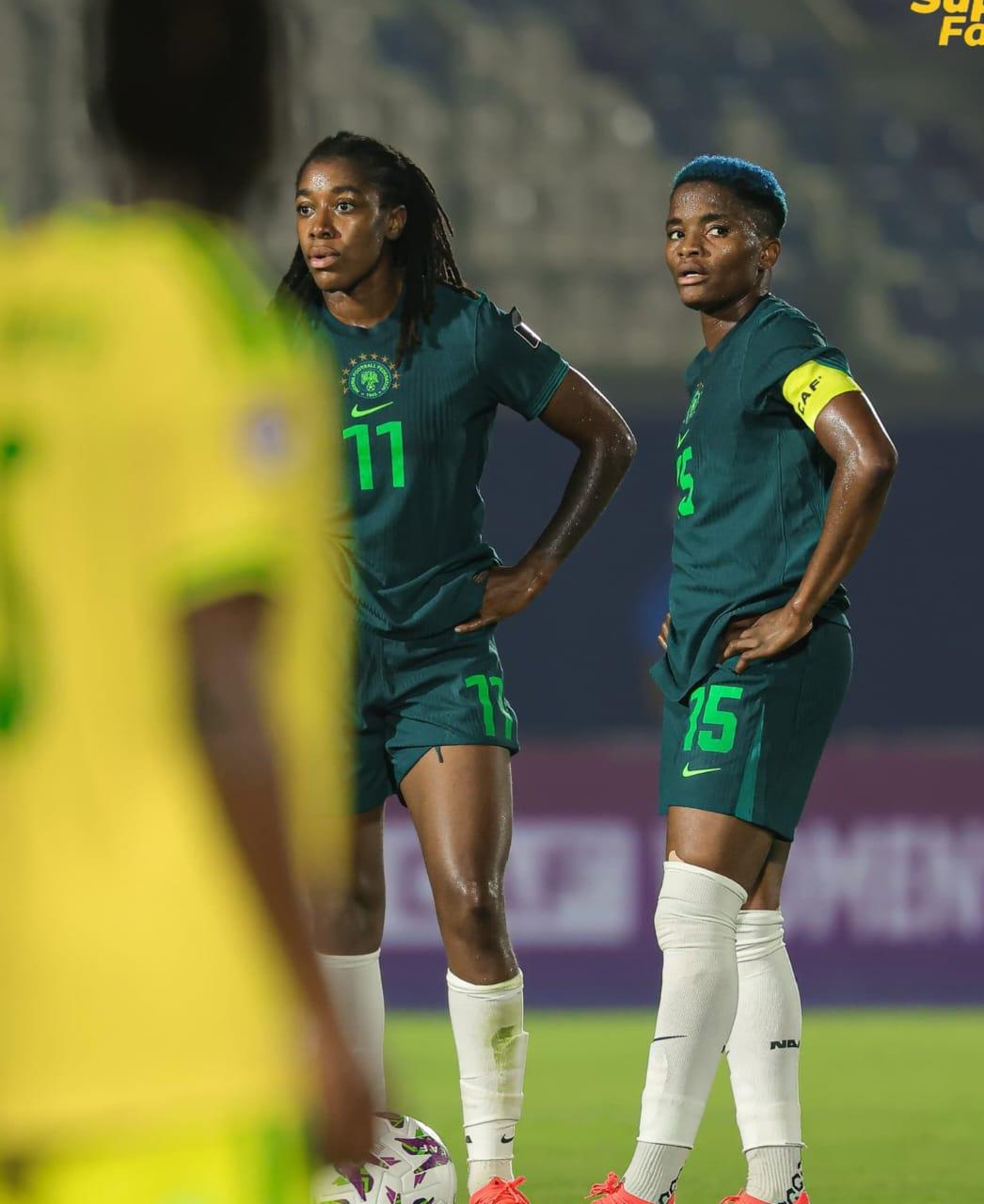
The Super Falcons arrived in Morocco seeking an unprecedented 11th continental title but endured their worst-ever WAFCON campaign.
Their failure to win their group proved costly, with Cameroon eliminating them in the quarter-finals. Nigeria’s disappointment deepened when South Africa defeated them 2-1 in the World Cup play-off, ruling the nine-time? No, 10-time champions out of the 2027 FIFA Women’s World Cup for the first time.
3) Super Falcons Gradually Losing The Dominance
Nigeria’s struggles have renewed debate about the country’s football development structures, particularly its reliance on players developed largely outside the domestic system.
Meanwhile, Morocco continues to invest heavily in women’s football, while Cameroon, Algeria, Ghana and Malawi are all making significant progress.
With Cameroon now benefiting from a $2 million prize purse and several emerging nations closing the gap, Nigeria’s long-standing dominance can no longer be taken for granted.
Former Super Falcons striker Desire Oparanozie has called for “a fresh start” and a comprehensive review of the team’s structure. The Nigeria Football Federation has subsequently established a fact-finding committee to investigate the disappointing campaign.
Attendance remains a concern
Despite the quality of football, spectator attendance remains one of the tournament’s major concerns.
Matches involving hosts Morocco generally attracted significant crowds, but several fixtures involving other nations were played in front of sparse stands.
The problem is not new and has been evident at recent editions of the tournament. High travel costs, visa requirements and the late rescheduling of the competition may all have contributed to the poor attendance.
For CAF and future hosts, improving accessibility and creating stronger commercial and promotional strategies will be crucial if the WAFCON is to attract the audience its growing quality deserves.
4) VAR remains a work in progress
The use of Video Assistant Referee (VAR) technology also generated debate, particularly because of the length of some reviews.
One review during Cameroon’s group-stage victory over Mali reportedly lasted almost four minutes, highlighting the need for greater efficiency in the decision-making process.
There was also controversy surrounding penalty decisions awarded to hosts Morocco in the latter stages of the competition.
Ironically, Morocco’s biggest weakness from the penalty spot became apparent as the Atlas Lionesses struggled to convert several opportunities, an area they will need to improve if they are to finally win their first WAFCON title.
5) Who Hosts The Next WAFCON?
With Morocco having hosted the last three editions, attention will now turn to the future of the tournament.
CAF has yet to confirm where and when the 2028 edition will be staged. The scheduling process will be particularly important because the tournament must avoid a clash with the 2028 Los Angeles Olympic Games, scheduled for July 14–31.
A similar scheduling conflict contributed to the postponement of the 2024 WAFCON until July 2025.
Establishing a consistent and sustainable place for the tournament within the international calendar will be essential for the continued growth of the women’s game.
6) Olympic Qualifier
Attention will now shift towards qualification for the 2028 Olympics, with the next phase scheduled to resume in October and continue through three international windows next year. Thirty-two nations will compete for two Olympic places.
South Africa and Ghana will also continue their pursuit of the 2027 FIFA Women’s World Cup through the inter-confederation qualification route.
The 2026 WAFCON has ultimately demonstrated that African women’s football is becoming more competitive. Cameroon’s emergence as champions, Malawi’s remarkable run to the final and the struggles of traditional giants Nigeria all point to a changing continental landscape.
The challenge for CAF now is to ensure that the progress witnessed in Morocco becomes a foundation for sustained development rather than a one-off success.

you may also read

- by Niyi Busari ,
- Aug 17, 2026
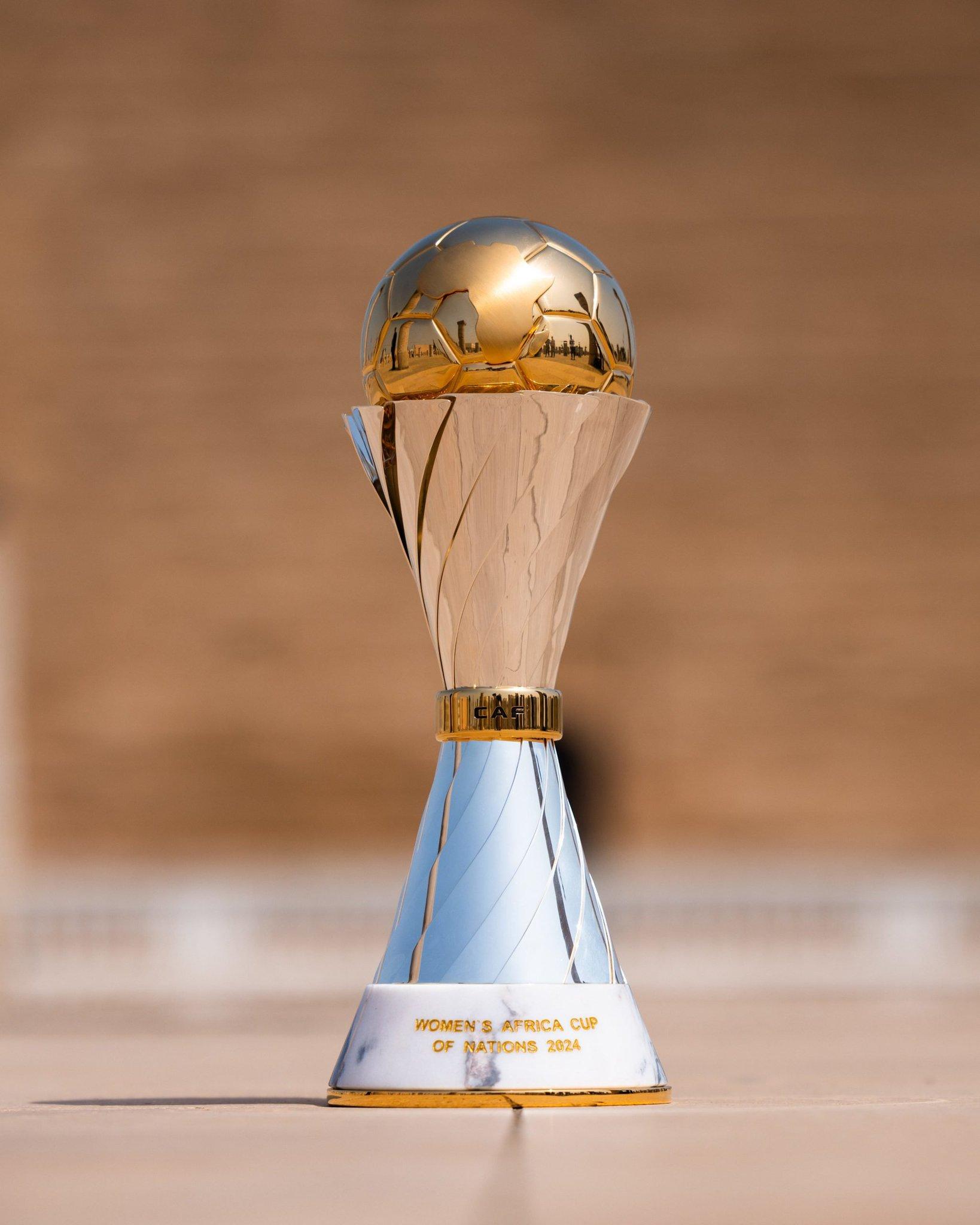
From Nigeria To Cameroon: Full List Of WAFCON Champions
- by Admin ,
- Aug 16, 2026
Niger Consider Ghana As Potential Home Venue for AFCON 2027 ...

- by Niyi Busari ,
- Aug 15, 2026
Why Super Falcons Missed World Cup Qualification - Madugu
- by Niyi Busari ,
- Aug 12, 2026
0 Comments:
Leave a Reply